FLY TO MOROCCO Choose your departure country
TRAVELLING FROM ANOTHER COUNTRY? Explore all Private Morocco Tours →

Discover the historic medina, gardens, palaces, Moroccan food and local life of Marrakech before exploring the High Atlas, kasbah country and southern Morocco beyond the city.
Marrakech is one of Morocco’s most recognizable destinations, but the city is much more than a collection of famous monuments. It is a place of narrow medina streets, artisan workshops, gardens, hidden riads, traditional markets and a constantly changing rhythm of local life.
Inside the historic medina, travelers move between centuries-old architecture, spice stalls, courtyards, rooftop terraces and neighborhood bakeries. Outside the old walls, Marrakech becomes broader and more contemporary, with modern districts, gardens, restaurants and hotels.
Marrakech is also one of Morocco’s most useful starting points. From the city, private journeys can continue toward the High Atlas Mountains, Aït Ben Haddou, Ouarzazate, Dades Valley and the Sahara.
If you are planning a longer journey, explore our Marrakech Tours or discover our Private Morocco Tours designed around your interests and pace.
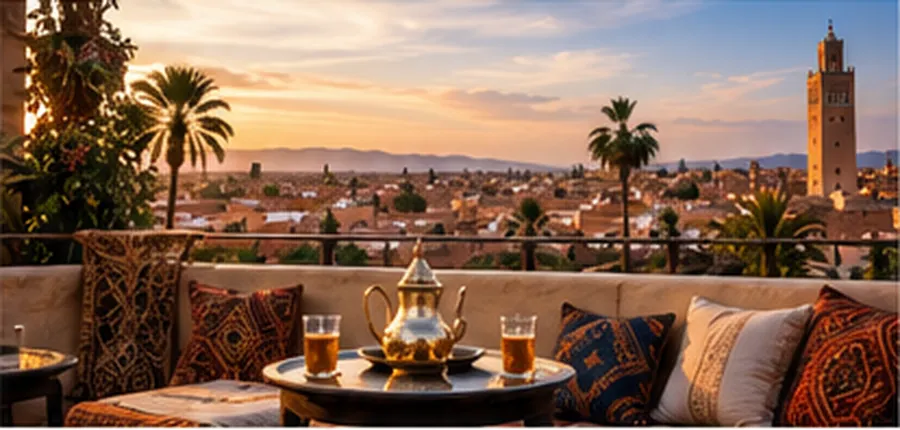
Marrakech works best when you combine the famous landmarks with time for neighborhoods, food, gardens and quieter moments away from the busiest parts of the medina.
The old city is a maze of markets, monuments, courtyards, workshops and everyday life. It rewards travelers who slow down and experience it beyond a simple checklist of sights.
Jemaa el-Fna changes throughout the day. Mornings are calmer, while evenings bring food stalls, musicians, performers and a completely different atmosphere.
The medina souks reveal leatherwork, metalwork, lamps, textiles, spices, carpets and artisan traditions that remain central to Marrakech.
Traditional riads offer one of the best contrasts in Marrakech: narrow, energetic streets outside and calm interior courtyards, gardens and terraces inside.
Marrakech has been shaped by dynasties, trade routes, religion and centuries of craftsmanship. Its architecture reflects that history through decorative plasterwork, carved cedar, zellij tiles, courtyards and monumental gates.
Bahia Palace is one of the city’s best-known examples of Moroccan decorative architecture. The Saadian Tombs reveal another period of the city’s history, while the Koutoubia Mosque remains one of Marrakech’s defining landmarks.
These places are most rewarding when they are understood as part of the city rather than isolated monuments.
Gardens, shaded courtyards and palm-filled spaces offer a calm contrast to the energy of the medina.
Majorelle Garden combines botanical planting, bold color and design. Visiting early can make the experience more relaxed.
Menara Gardens provide a more open landscape, with the pavilion and reservoir framed by the Atlas Mountains on clear days.
Some of Marrakech’s most beautiful green spaces are hidden behind plain walls inside traditional riads and historic homes.
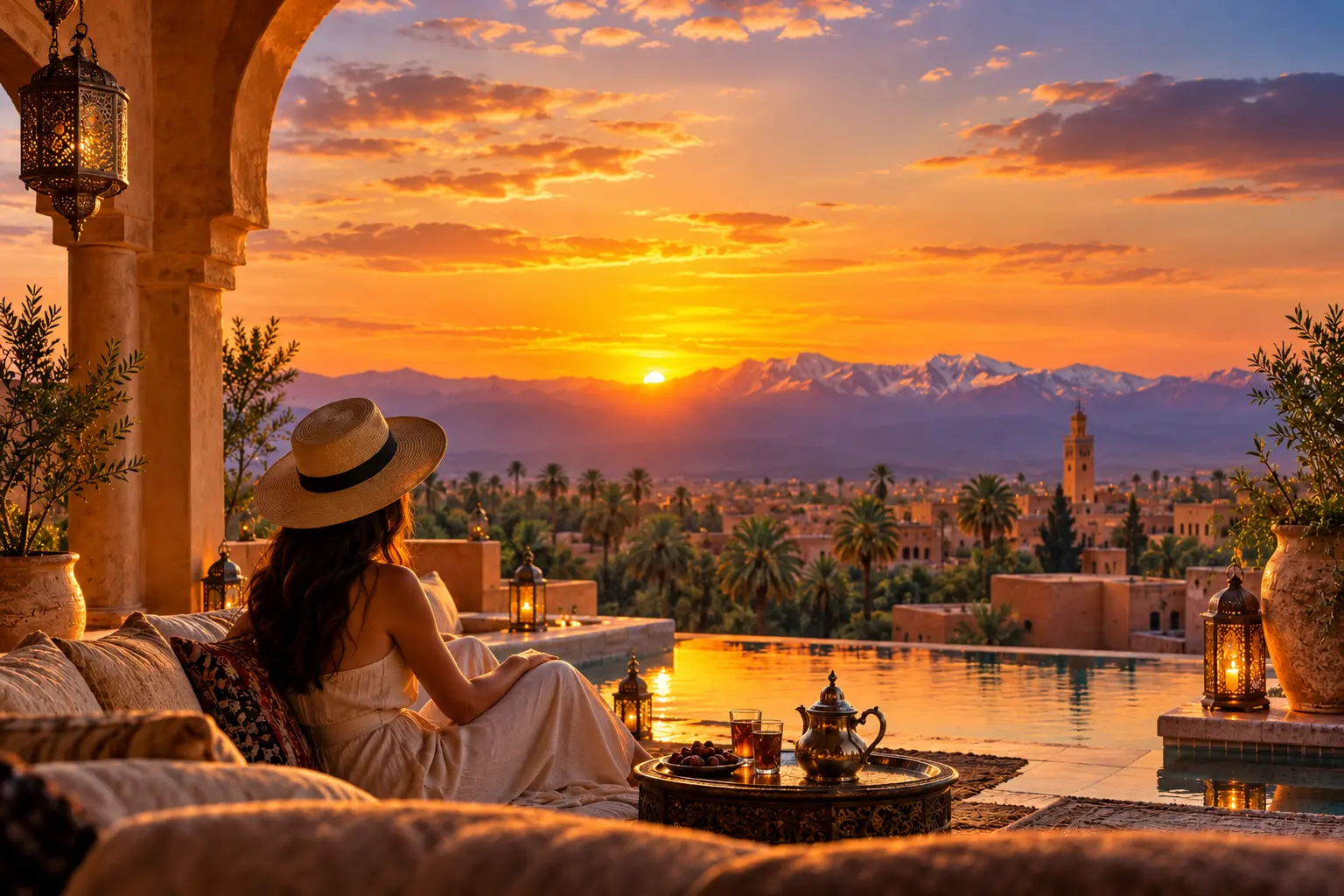
Food is one of the easiest ways to understand Marrakech. The city brings together traditional Moroccan cooking, street food, family recipes and more contemporary dining.
Tagines, couscous, tanjia, grilled meats, fresh bread, olives, dates, pastries and mint tea appear in different forms throughout the city.
Markets also reveal the ingredients behind Moroccan cooking: preserved lemons, spices, herbs, vegetables, dried fruits and regional products arriving from across the country.
Marrakech can be visited throughout the year, but the experience changes considerably with the season.
Spring and autumn generally offer comfortable temperatures for walking, sightseeing and day trips. Summer can be extremely hot during the middle of the day, while winter mornings and evenings may feel surprisingly cool.
If your journey also includes the High Atlas or Sahara, the season matters even more because mountain and desert conditions can be very different from Marrakech itself.
Some of Morocco’s most memorable landscapes begin only after leaving the city behind.
The High Atlas offers mountain roads, walking routes, village life and a very different rhythm from Marrakech.
Routes over the Atlas can continue through Aït Ben Haddou, Ouarzazate, Skoura, Dades and eventually toward the Sahara.
Marrakech can be rushed in a day, but a better experience usually comes from allowing enough time to explore both the famous sights and the city’s quieter details.
Two or three nights can give you time for the medina, gardens, food and historic sites without turning every hour into a schedule.
Travelers continuing toward the Atlas Mountains or southern Morocco should also avoid treating Marrakech simply as a place to arrive and immediately leave.
Marrakech can be the beginning, middle or end of a longer private journey through Morocco.
Mythic Morocco Tours can connect Marrakech with the High Atlas, Ouarzazate, Dades Valley, the Sahara, Atlantic coast and other destinations while adapting the route around your travel style.
Two or three nights can provide enough time for the medina, major historic sites, gardens and local food without rushing. More time is useful if you also want day trips or a slower pace.
Yes, but the Sahara is not close to Marrakech. A well-planned desert journey normally crosses the High Atlas and southern Morocco over several days.
Yes. Marrakech is very well placed for routes into the High Atlas, including valleys, villages and walking areas.
The medina is dense and maze-like, but that is part of its character. A local guide can be useful for understanding historic sites, crafts and neighborhoods.
Marrakech is often more open, energetic and connected to southern Morocco, while Fes is especially known for its historic medina, traditional crafts and imperial heritage.
Create a private Morocco journey that combines Marrakech with the landscapes, culture and experiences that matter most to you.